
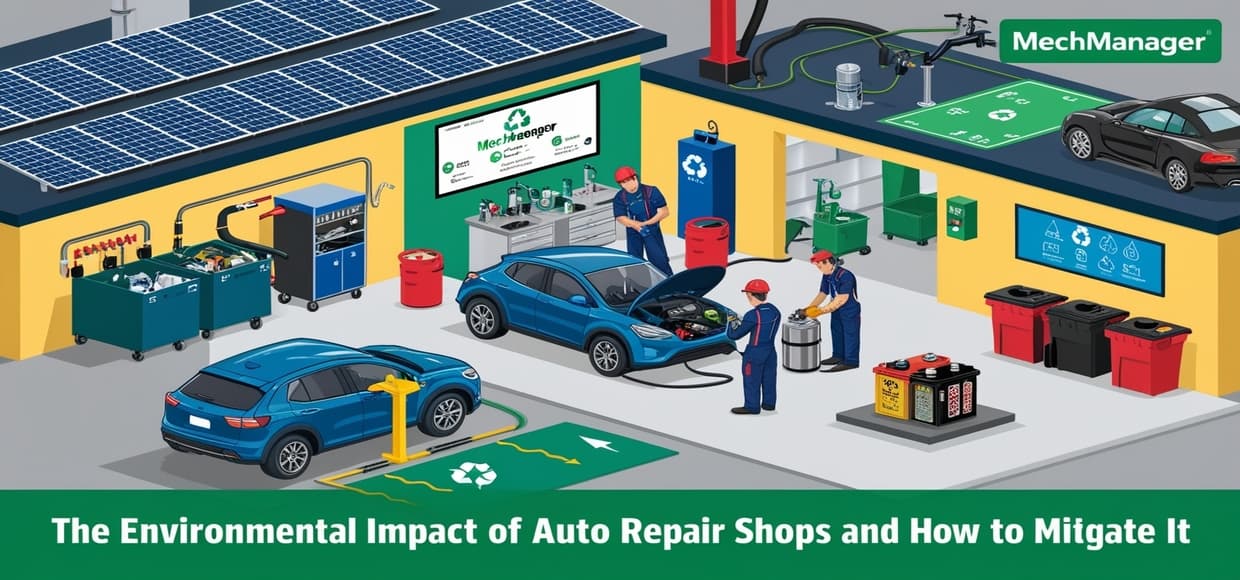
Auto repair shops are essential for keeping vehicles running smoothly, but they can also have a significant environmental impact. From the improper disposal of hazardous waste to high energy consumption, these shops contribute to pollution in various ways. The good news is that there are many effective steps you can take to reduce this impact while still running a successful business.
In this article, we’ll explore the common environmental challenges faced by auto repair shops and provide practical solutions to minimize your environmental footprint. With the help of MechManager garage management software, you can streamline your operations while staying eco-friendly.
1. Proper Management of Hazardous Waste:
Auto repair shops produce a lot of hazardous waste, including used oil, antifreeze, brake fluid, and other chemicals. If not disposed of properly, these substances can contaminate the soil and water, causing long-term environmental damage.
How to Mitigate It:
i. Ensure Correct Disposal: Work with certified waste disposal companies that specialize in handling automotive fluids and other hazardous materials. Always follow local regulations for disposal.
ii. Set Up Recycling Programs: Products like used motor oil can be recycled, reducing the need for new materials. Create a system to collect and recycle fluids, batteries, and other automotive parts.
iii. Proper Storage: Keep hazardous materials in leak-proof containers and ensure they are correctly labeled. It is crucial to have spill kits on hand for emergencies, and all staff should be trained in their proper use.
MechManager can help you stay on top of disposal schedules and keep your shop compliant with environmental regulations, reducing risks and improving efficiency.
2. Reducing Air Pollution:
Air pollution is another significant issue in auto repair shops. Emissions from vehicles and fumes from chemicals can negatively impact air quality, both in and around your shop.
How to Mitigate It:
i. Install Ventilation Systems: A high-quality ventilation system will help remove harmful fumes from the air, ensuring the safety of your staff while also benefiting the environment.
ii. Switch to Eco-Friendly Products: Use water-based cleaners and low-VOC (volatile organic compounds) paints and solvents. These products release fewer chemicals into the air and are just as effective as traditional options.
iii. Promote Regular Maintenance: Encourage customers to keep their vehicles in good condition, as a well-maintained engine releases fewer emissions. Offering eco-friendly services like emissions testing can further reduce the environmental impact of the vehicles you work on.
3. Preventing Water Pollution:
Water pollution can occur when oil, grease, and chemicals from the repair process wash into storm drains. If these pollutants reach water bodies, they can harm aquatic life and the overall ecosystem.
How to Mitigate It:
i. Use Oil-Water Separators: Installing oil-water separators in your shop’s drainage system can prevent oil and other contaminants from entering the water supply.
ii. Eco-Friendly Car Washing: If your shop offers car washing services, switch to biodegradable soaps and use water recycling systems to minimize waste.
iii. Take Preventative Measures: Clean up spills immediately and use absorbent materials to prevent chemicals from reaching the water supply. Consider using drip trays under vehicles during repairs.
4. Lowering Energy Consumption:
Auto repair shops consume a lot of energy, from powering tools and machinery to lighting and heating. Reducing energy and using the equipments responsibly will not only helps the environment, but also helpful in cost cutting.
How to Mitigate It:
i. Switch to Energy-Efficient Lighting: LED lighting uses far less energy than traditional bulbs and lasts much longer, helping you save money on energy bills.
ii. Upgrade to Energy-Efficient Equipment: Choose tools that have the ENERGY STAR certification, showing they meet top-tier energy efficiency standards.
iii. Install Solar Panels: Solar panels may require a higher initial investment, but the long-term savings and environmental benefits make them an excellent option for auto shops looking to go green.
iv. Schedule Routine Maintenance: Ensure that your shop’s HVAC system and other large equipment are regularly maintained to prevent energy waste.
5. Recycling and Reducing Waste:
Auto repair shops generate a lot of waste, including old parts, packaging, and other materials. Reducing waste and increasing recycling can greatly lower your shop’s environmental footprint.
How to Mitigate It:
i. Set Up Recycling Bins: Make sure your shop has designated recycling bins for paper, plastic, and metal. Many car parts, such as batteries, tires, and scrap metal, can also be recycled.
ii. Return Used Parts: Work with suppliers who offer core return programs for used parts. This is helpful for the parts to be refurbished or recycled rather than ending up in landfills.
iii. Purchase in Bulk: Buying materials in bulk reduces the amount of packaging waste and decreases the frequency of deliveries, which helps lower transportation emissions.
With MechManager, you can better manage inventory and ensure that you’re only ordering what you need, helping to reduce excess stock and waste.
6. Embracing Eco-Friendly Alternatives:
Technology is continually advancing, and there are more eco-friendly alternatives available now than ever before. These changes can reduce your shop’s overall environmental impact.
How to Mitigate It:
i. Use Biodegradable Fluids: Opt for biodegradable oils, coolants, and other fluids where possible. These options are much friendlier to the environment.
ii. Install Recycled Parts: Encourage customers to consider high-quality recycled or refurbished parts, which can reduce the need for new manufacturing and the associated environmental impact.
iii. Service Electric and Hybrid Vehicles: As more consumers switch to electric and hybrid vehicles, offering specialized services for these cars can reduce emissions and help your shop contribute to a cleaner planet.
7. Staff Training and Awareness:
To make a lasting environmental impact, your entire team needs to be on board with sustainable practices. Educating your staff and encouraging eco-friendly habits is a vital part of reducing your shop’s environmental footprint.
How to Mitigate It:
i. Train Your Team: Educating your team on sustainable practices is key to making a long-lasting difference. Make sure everyone knows how to properly handle hazardous materials, prevent spills, and reduce energy consumption.
ii. Lead by Example: When management actively engages in eco-friendly practices, staff members are more likely to follow suit. Show that sustainability is a priority.
iii. Involve Customers: Share your shop’s eco-friendly initiatives with customers. This can enhance your business's reputation and draw in environmentally conscious customers.
Conclusion
Auto repair shops contribute to environmental issues, but with careful planning and the right strategies, these impacts can be minimized. By managing hazardous waste properly, cutting down on energy consumption, and recycling materials wherever possible, you can create a greener and more sustainable auto repair shop.
Using MechManager can help you track waste, manage inventory, and reduce energy usage, streamlining your eco-friendly efforts. By taking these steps, your shop will not only help the environment but also enhance its reputation and attract customers who value sustainability.
With small changes and the right tools, you can create a positive impact for both your business and the planet.